

The Steven Meisel shoot in which the fashion industry is a glamorous and cruel dance competition.
Alessia Glaviano, head of Global PhotoVogue, writes a letter about Meisel's ‘Fashion Marathon’ shoot from the March 1997 issue of Vogue Italia.

There are periods in history when you’re living inside something extraordinary without realising it. In the 1990s, I was in my twenties, living in New York, taking my first steps into the world that would later define my life. The city pulsed with possibility; the air was charged with creativity. Everything seemed open.
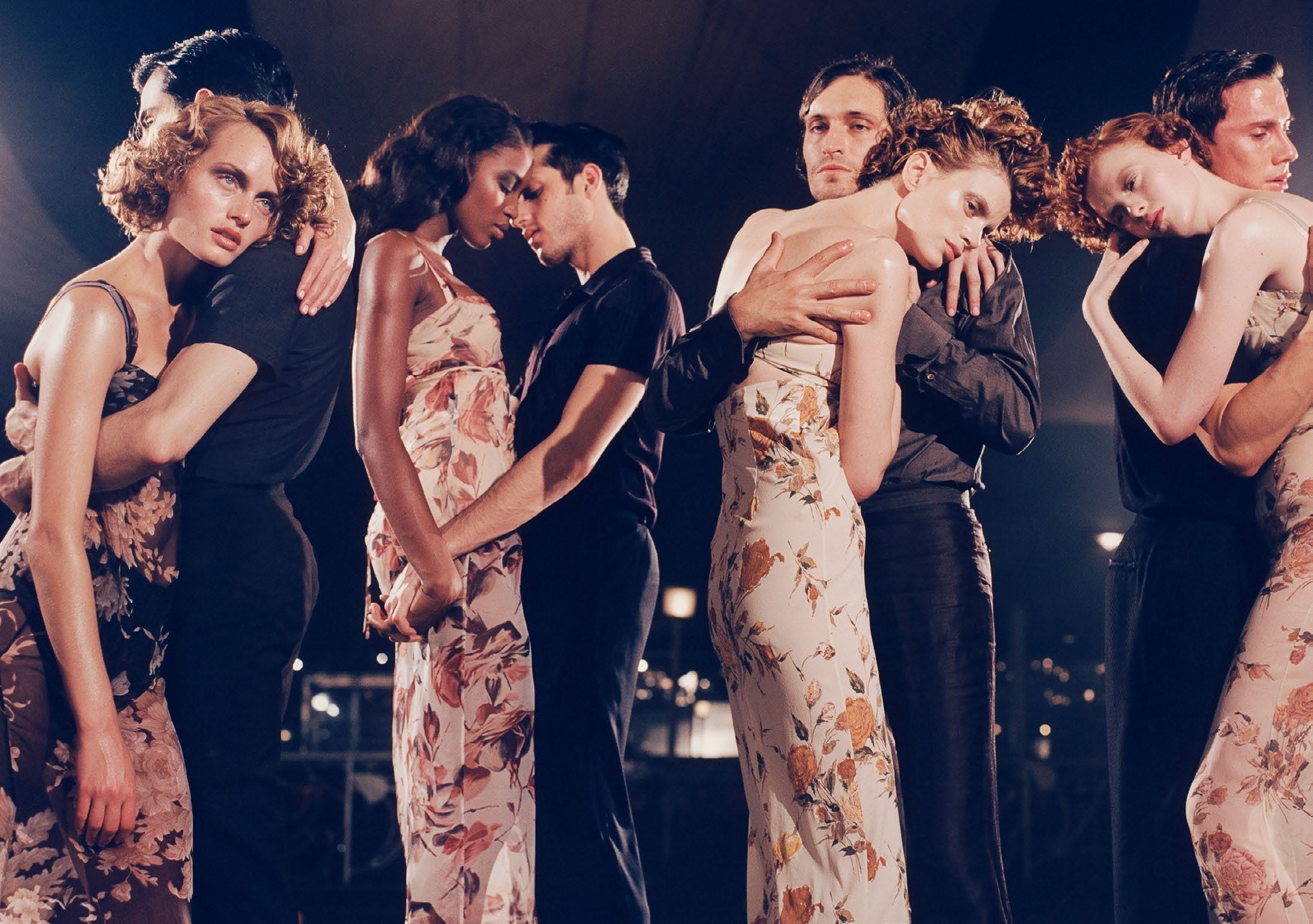
This image comes from ‘Fashion Marathon’, the cover story of Vogue Italia’s March 1997 issue, photographed by Steven Meisel. It drew inspiration from Sydney Pollack’s 1969 film They Shoot Horses, Don’t They?, in which Jane Fonda stars in a devastating portrait of the Great Depression. The premise – a group of desperate young people enduring punishing dance marathons for a cash prize – offered a metaphor for ambition, survival and the commodification of endurance. Meisel reinterpreted it through fashion’s lens, staging a competition at once glamorous and cruel, a spectacle where beauty and exhaustion were entwined.
By the late 1990s, Meisel was already the undisputed master of fashion narrative. To me, he remains the greatest fashion photographer of all time, alongside Richard Avedon. His voracious cultural appetite let him move between homage and invention, absorbing references from painting, cinema, art, current events and social issues, and transmuting them into something wholly his own. Each month he reinvented himself, with only one constant: perfection.
Vogue Italia was my North Star. Without social media, the magazine was a primary portal to visual culture; you didn’t scroll, you anticipated. And when it came, you studied it until the next issue arrived.
The 1990s were a cultural crucible. Artists collaborated with fashion houses in ways that felt radical: Cindy Sherman with Comme des Garçons, Vanessa Beecroft with Gucci. Fashion borrowed art’s theatricality, art borrowed fashion’s boldness. There was a hunger to learn, to cross disciplines without asking permission.
Fashion photography was also shifting. The gloss of the 1980s gave way to a more varied language. Magazines featured photographers such as Corinne Day, whose intimate style, shaped by Nan Goldin’s influence, brought rawness and emotional proximity. Editorials could now be gritty as well as aspirational.
Meisel existed both within and beyond this shift. While most photographers could be categorised – glamorous, documentary, minimalist – he was something else. Chameleonic yet unmistakable. He could inhabit any style, from fantasy to stripped-back realism, without losing his signature: absolute precision in every detail.
The ‘Fashion Marathon’ cast (Vincent Gallo, Amber Valletta, Carolyn Murphy, Karen Elson, Kristen McMenamy and Naomi Campbell) embodied both individuality and the era’s collective language. In Meisel’s hands, they became characters in a drama speaking as much to cinema and social history as to seasonal trends.
Seen now, the story feels like a parable. The marathon as an allegory for fashion’s pace, relentless and competitive, was prescient. The late 1990s already accelerated toward the 24/7 cycle that defines today.
Pollack’s film also inspired Alexander McQueen’s Spring/Summer 2004 collection, where couples danced to exhaustion in a distorted ballroom. Like Meisel, McQueen reframed cinema’s despair into fashion’s theatre, where the runway became both stage and battleground.
In 1997, I could not have known that four years later I would join Vogue Italia, where I would remain for over 25 years. At the time, I was a photographer’s assistant at Pier59 Studios, immersed in shoots, light tests and model castings. I understood mechanics, but Vogue Italia (and Meisel in particular) showed me how mechanics could be elevated into cultural commentary.
The enduring power of ‘Fashion Marathon’ lies in the way it operates at once as an homage to cinema, a mirror to fashion’s pace, a document of the 1990s at its creative zenith, and an allegory that remains legible decades later. By reframing 1930s despair through 1990s fashion, Meisel collapses historical distance and reminds us how spectacle and survival intertwine then, as now. The image endures not only for its beauty but because it is intellectually alive, demanding to be read as much as admired.
WHY is the rest of the Team constantly Omitted from these Profiles? Stylist? Hair? MakeUp? We all know the Importance of each Individual specialty!
Do Better! 😳
So interesting ! Thank you System ! Long live Meisel